
Adding credentials
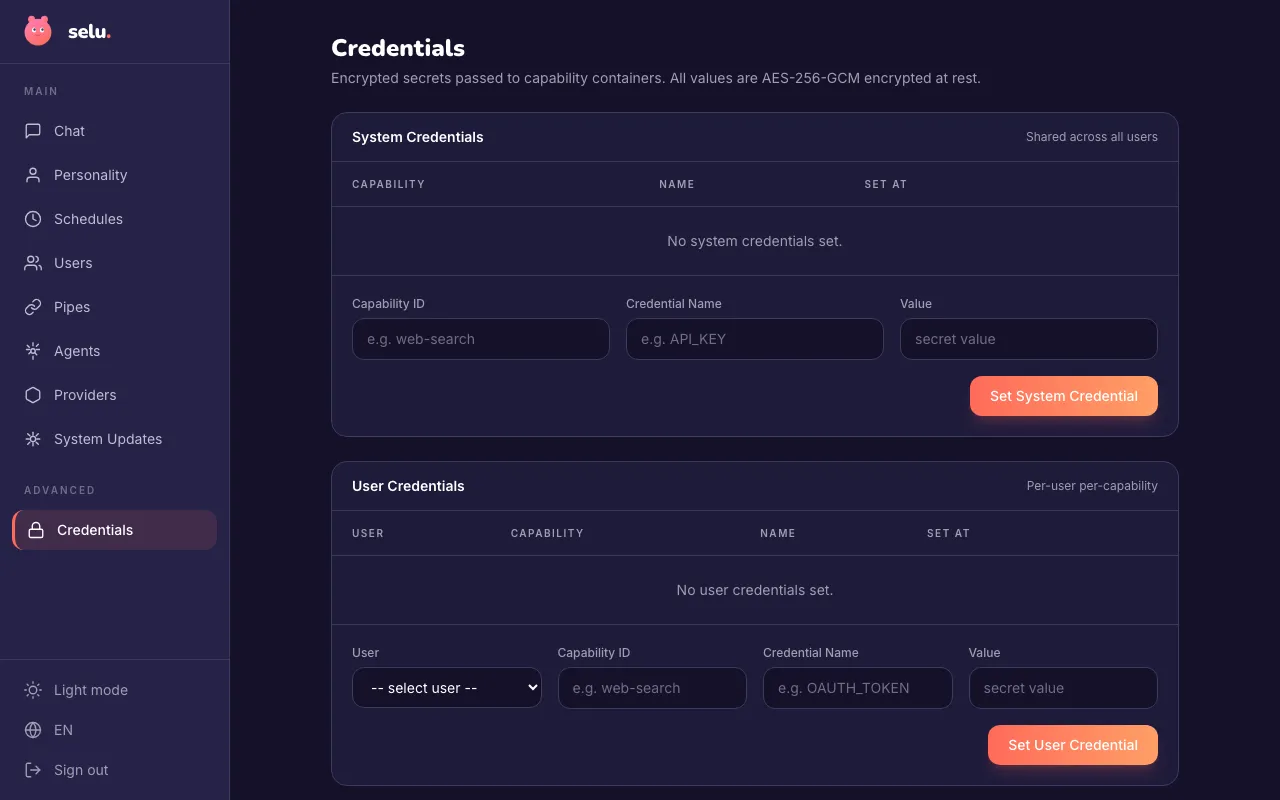
Credentials can be added in several places: through the Credentials page for system-wide secrets, LLM Providers for API keys, or directly on individual agent detail pages using the new Secrets tab.
Selu handles sensitive information — API keys, passwords, tokens — with care. All credentials are encrypted at rest and never exposed in plain text through the dashboard or logs.
When you save a credential in Selu (like an LLM provider API key or a BlueBubbles password), it’s immediately encrypted before being stored. Selu uses AES-256-GCM encryption (authenticated encryption), which is the same standard used by banks and governments. This means credentials are both encrypted and tamper-proof.
The encryption key is derived from your Selu instance’s master secret, which is set during initial setup via the SELU_ENCRYPTION_KEY environment variable.
Credentials are stored in Selu’s database, never on the filesystem. The database itself should be protected too — see the Docker Setup guide for recommendations on securing your volumes.
Adding credentials
Credentials can be added in several places: through the Credentials page for system-wide secrets, LLM Providers for API keys, or directly on individual agent detail pages using the new Secrets tab.
Viewing credentials
For security, saved credentials are always masked in the dashboard. You’ll see •••••••• instead of the actual value.
Updating credentials
To change a credential, simply paste the new value into the field and save. The old value is overwritten.
Deleting credentials
Remove a credential by clearing the field and saving, or by using the “Remove” button on agent detail pages.
All users can now change their own passwords through the web interface:
For security, changing your password will automatically sign out all your other active sessions while keeping your current session active.
Administrators can control which agents individual users have access to through the Users page:
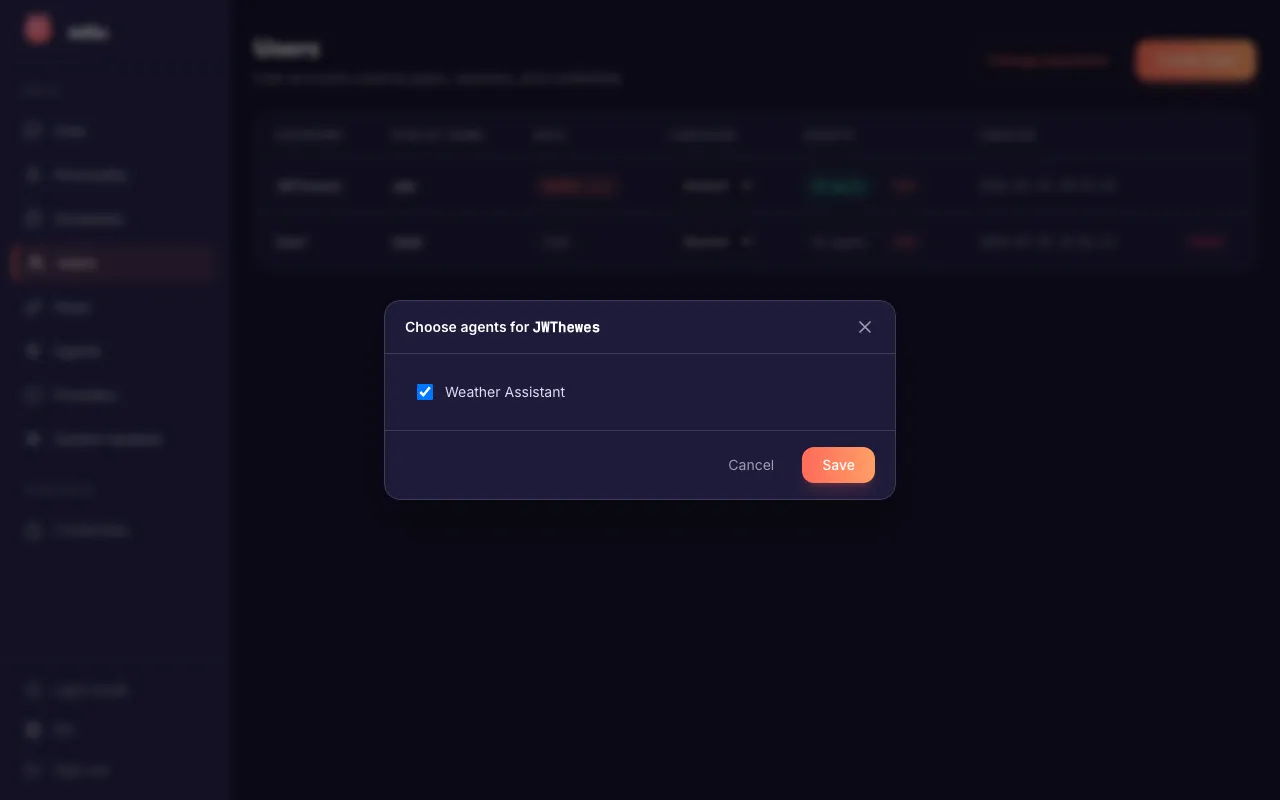
By default, new users can access all available agents. If you want to restrict access:
The easiest way to manage agent credentials is now through the Secrets tab on each agent’s detail page:
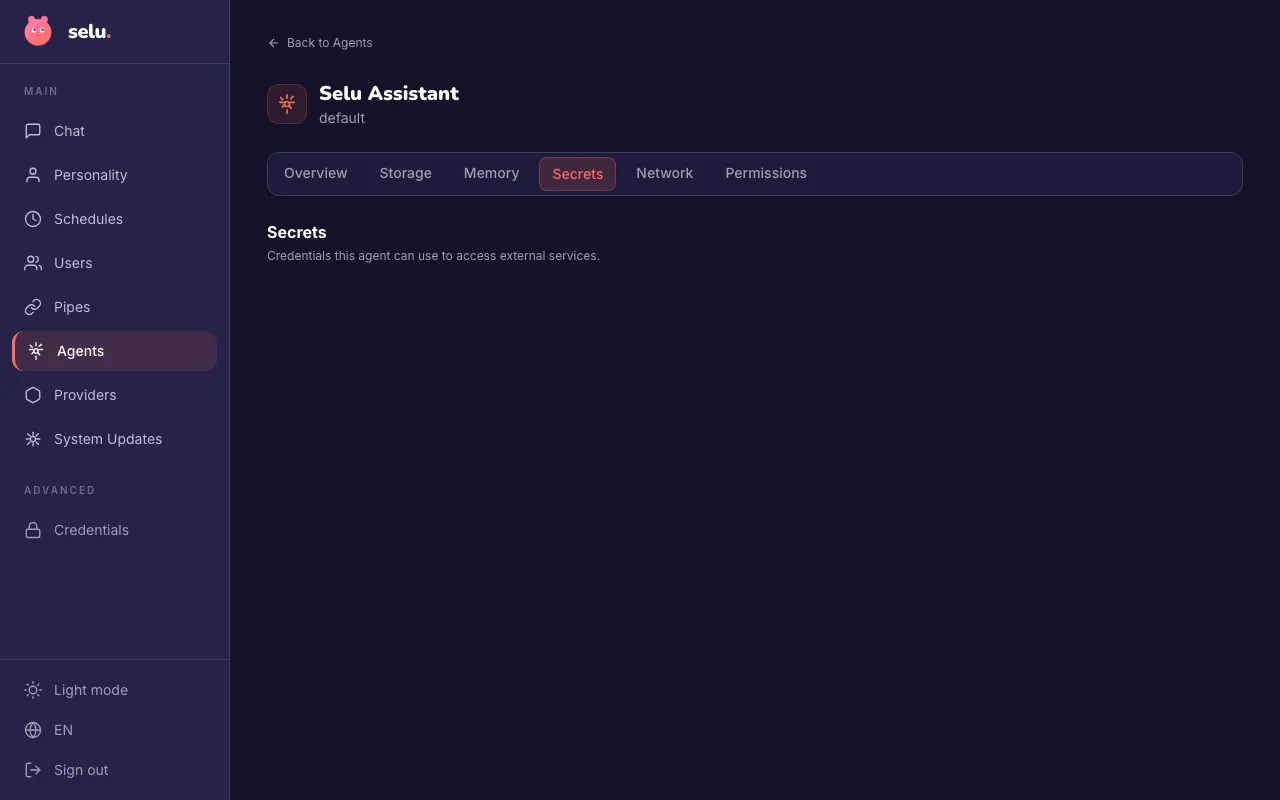
Each credential declaration now includes:
The agent developer chooses the appropriate scope when declaring credentials in their manifest.yaml.
Selu manages the following types of credentials:
| Credential | Used for | Where to manage |
|---|---|---|
| LLM API keys | Anthropic, OpenAI, Bedrock access keys | LLM Providers page |
| Channel tokens | Telegram bot token, BlueBubbles password | Pipes setup pages |
| Agent secrets | Per-agent credentials for third-party services | Agent detail pages → Secrets tab |
| System credentials | Shared secrets used by multiple agents | Credentials page |
| Master secret | SELU_ENCRYPTION_KEY — the root encryption key | Environment variable |
SELU_ENCRYPTION_KEY in a password manager or secure vault, separate from your Selu backups.If you forget your password, an administrator can reset it securely using the command line:
# Admin resets a user's passwordecho 'new-secure-password' | docker exec -i selu-orchestrator selu-orchestrator reset-password --username alice --password-stdinThis command requires administrator access to the server and will revoke all active sessions for the affected user.