
selu
The core application server. Handles the dashboard, message routing, local SQLite data, and orchestration.
Selu runs as a set of Docker containers, making it easy to deploy on any machine that supports Docker. This guide walks you through the architecture and setup.
A Selu deployment consists of the main Selu server container and on-demand agent containers:
selu
The core application server. Handles the dashboard, message routing, local SQLite data, and orchestration.
Agent containers
Each installed agent runs in its own container. These are created automatically when you install agents from the marketplace.
All containers communicate over an internal Docker network. Agent containers connect to the server via gRPC.
mkdir selu && cd selubash <(curl -fsSL https://selu.bot/install.sh)bash <(curl -fsSL https://selu.bot/install.sh) --yes --channel stableOpen http://localhost:3000 in your browser to access the Selu dashboard.
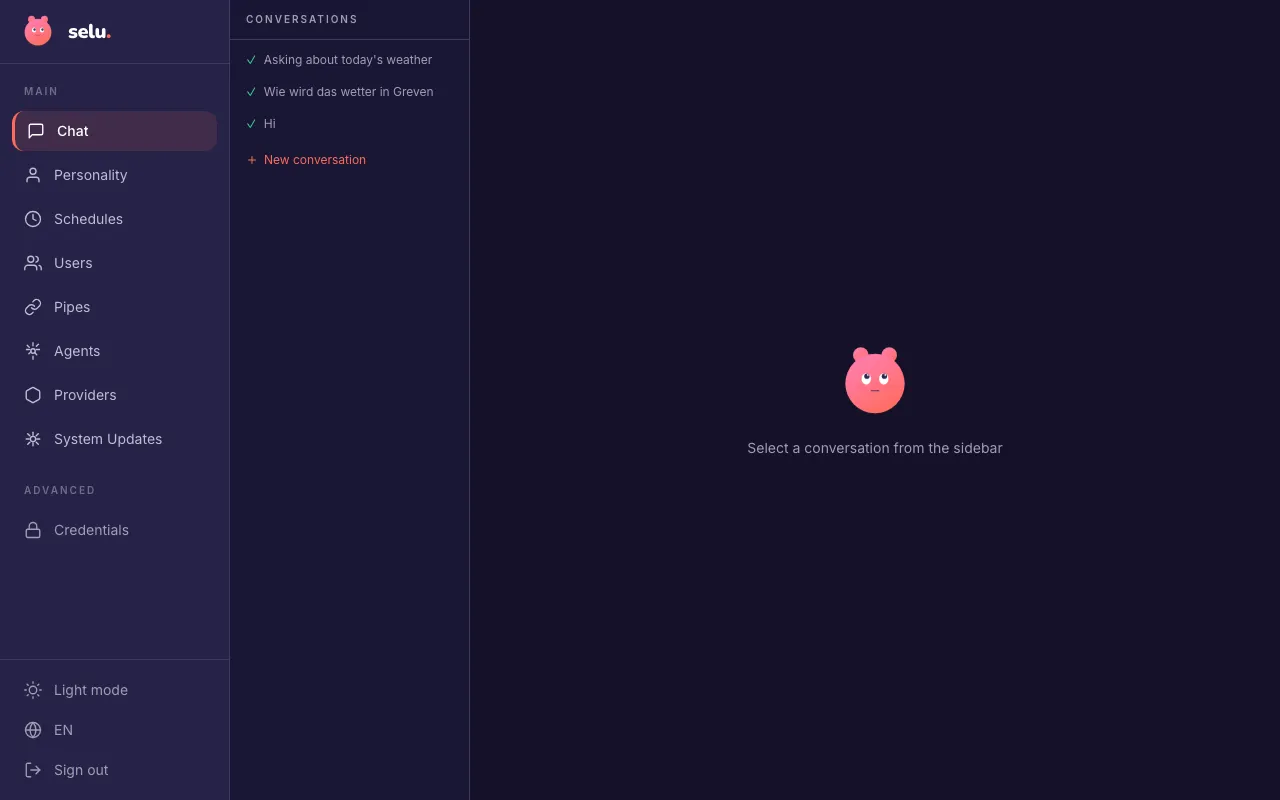
The default docker-compose.yml looks like this:
services: selu: image: ghcr.io/selu-bot/selu:${SELU_IMAGE_TAG:-stable} ports: - "${SELU__SERVER__PORT:-3000}:${SELU__SERVER__PORT:-3000}" environment: - SELU__ENCRYPTION_KEY=${SELU__ENCRYPTION_KEY} - SELU__SERVER__HOST=0.0.0.0 - SELU__SERVER__PORT=${SELU__SERVER__PORT:-3000} - SELU__DATABASE__URL=sqlite:///app/data/selu.db?mode=rwc - SELU__MARKETPLACE_URL=https://selu.bot/api/marketplace/agents - SELU__INSTALLED_AGENTS_DIR=/app/installed_agents - SELU__RELEASE_METADATA_URL=https://selu.bot/api/releases/selu volumes: - /var/run/docker.sock:/var/run/docker.sock - ./data:/app/data - ./installed_agents:/app/installed_agentsstable, dev, nightly).Selu verifies release digests from https://selu.bot/api/releases/selu before applying updates.
Updates are applied by the selu-updater sidecar container, so update jobs continue even while Selu is being restarted.
By default, the sidecar does not refresh itself in the same run. It applies its own image refresh on the next update cycle.
SELU__ENCRYPTION_KEY secret. This key protects encrypted credentials at rest../data which contains your database and runtime state.See the Environment Variables reference for all available configuration options.